
United States, 1972
Hasna Sal is a public artist, architect, researcher, and writer whose practice bridges art, architecture, ecology, and social justice. Working across scales—from intimate stained-glass works to large-scale public installations and transdisciplinary research—her work centers on how spaces, materials, and stories shape collective memory and environmental futures.
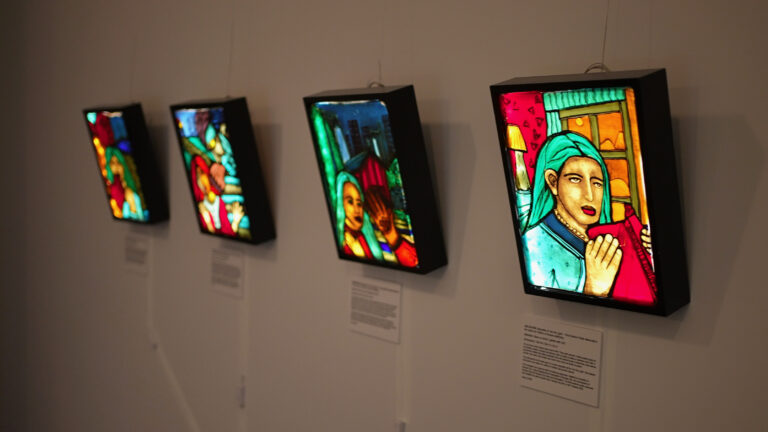
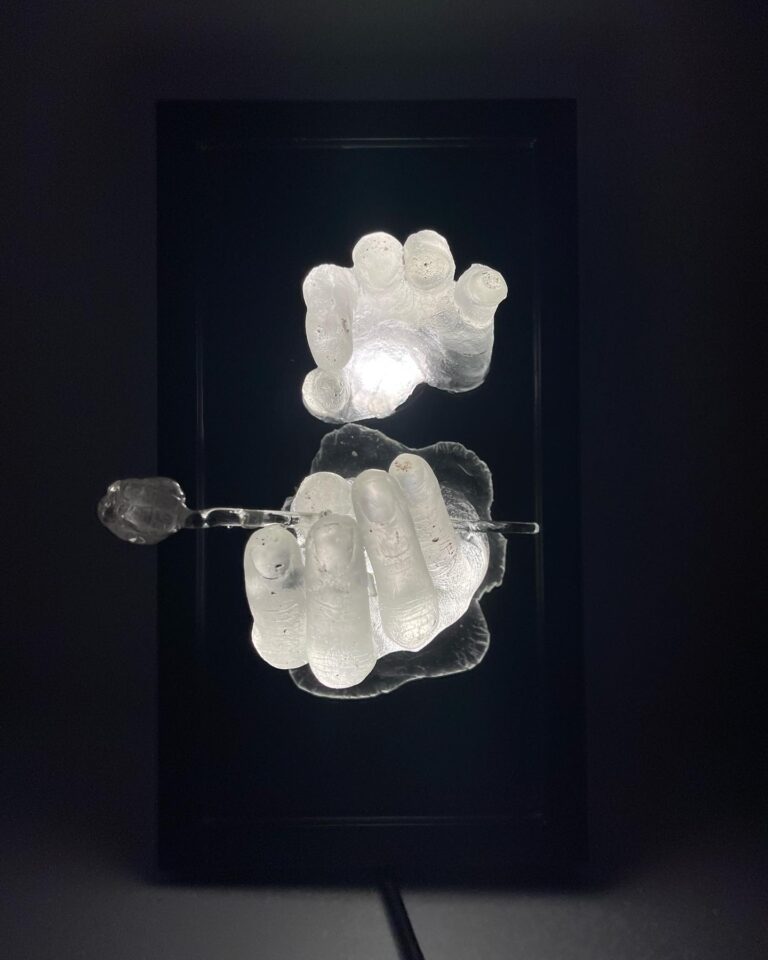
Trained as an architect and deeply engaged in public art, Hasna’s creative practice is rooted in material experimentation and site-specific inquiry. She is widely known for her glass installations that explore light as both a physical and symbolic medium, activating spaces of care, community, and reflection. Her public artworks often inhabit civic and healthcare environments, where she uses color, transparency, and narrative imagery to foster healing, connection, and a sense of belonging. These works reflect her long-standing interest in architecture not only as form-making, but as a social and ethical act.
Parallel to her art practice, Hasna is an architectural designer and educator with a strong commitment to spatial justice and transdisciplinary pedagogy. Her teaching and academic work integrate architecture, landscape, visual culture, and environmental humanities, encouraging students to see design as inseparable from ecological systems and lived experience. She has contributed to design studios, lectures, and research conversations that foreground equity, community engagement, and the cultural dimensions of the built environment.
A significant strand of Hasna’s work focuses on ecological research and storytelling, particularly in relation to Vembanad Lake in Kerala, India. She is the author of the ongoing research project at Harvard Mittal Institute and her published book ‘Vembanad Lake and Its Untold Stories’, which weaves together oral histories, ecological data, cartography, and spatial analysis to document the socio-environmental transformations of one of India’s largest wetland systems. Through interviews with fishermen, farmers, coir workers, and local residents, her research highlights how large-scale interventions—such as bunds, land reclamation, and tourism infrastructure—have reshaped both ecosystems and everyday life. This work positions storytelling as a critical tool for inclusive conservation and environmental advocacy.
Hasna’s practice is inherently transnational, shaped by her experiences working across the United States and India. Her projects often move fluidly between research, design, writing, and visual representation, resulting in maps, diagrams, installations, and texts that speak to both academic and public audiences. She is particularly interested in how oral testimony, indigenous knowledge, and marginalized voices can be integrated into architectural and environmental discourse.
Through her interdisciplinary approach, Hasna Sal continues to expand the role of the architect-artist as a listener, mediator, and storyteller—one who works at the intersection of art, ecology, and society to imagine more just and sustainable futures.