
United Kingdom, 1974
Edi APOSTU is the one who first introduced the term HOLOTROPIC ART™ in art in 2006 and has curated the first International Holotropic Art Symposium in 2009 then followed by the editions of 2010 and 2011.
The Science of Holotropic Art: A Study of its Initiator and Influence
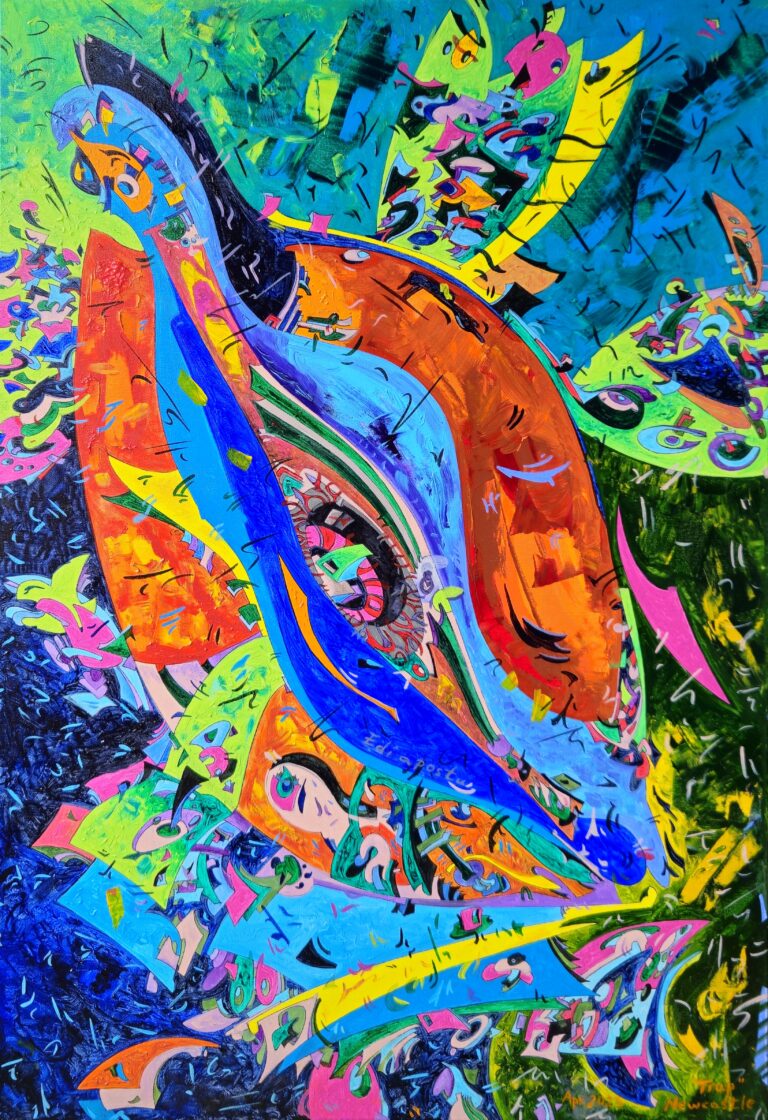
Holotropic Art, a term coined and pioneered by artist and philosopher Edi Apostu, represents a radical departure from traditional artistic movements. It is not merely a style of painting but a rigorous, interdisciplinary methodology that synthesizes principles from transpersonal psychology, neuroscience, and spiritual practice. This artistic framework positions the canvas not as a medium for representation, but as a scientific instrument for documenting and inducing non-ordinary states of consciousness. A comprehensive analysis of this field requires an examination of its founder’s philosophical and psychological underpinnings and an exploration of its nascent influence on the global art community.
The Initiator and the Foundational Scientific Framework
The central figure behind Holotropic Art is Edi Apostu, a Doctor of Philosophy who developed the technique from his deep engagement with the theories of psychologist Stanislav Grof. Grof’s concept of holotropic states of consciousness — derived from the Greek words holos (“whole”) and trepein (“moving toward”) — describes a journey of deep self-exploration and spiritual insight that can be accessed by transcending the ego. Apostu adapted this psychological framework into a precise artistic methodology. His creative process is a form of active Zen meditation, during which he systematically empties his mind of all conscious thought, intention, and ego-driven ideas. The art that emerges is, in effect, a direct, unfiltered transcription of the information and archetypes that arise from his unconscious mind.