
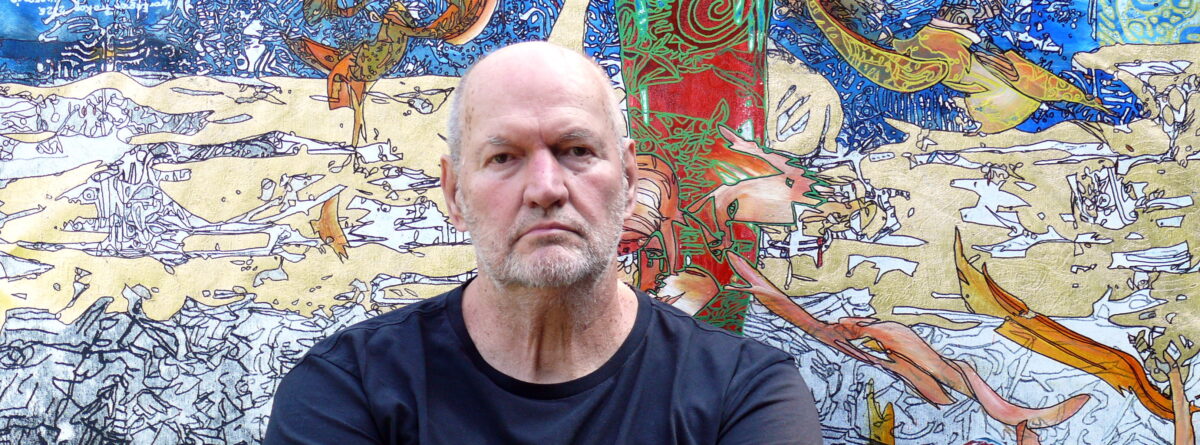
Hungary, 1953
There are quiet, almost imperceptible periods in human life when the world around us seems to fade. Objects lose their meaning, sounds grow dim, and a difficult-to-name emptiness settles deep within the soul. In such moments, it feels as though nothing can return us to ourselves. And yet—it is precisely then that the eternal order of nature becomes most tangible: that slow, unwavering renewal which, again and again, offers the possibility of hope.
Nature knows no finality. The passing of autumn is not merely loss, but the preparation for something new. In place of fallen leaves, fresh green shoots emerge in spring; the earth breathes life anew, and light falls differently upon the landscape. Within this cycle, not only the world is renewed, but the human being also becomes part of this rebirth. The rhythm of nature gently leads the soul back to its inner source, from which strength and faith arise.
This ancient experience finds its essence in the celebration of Easter. It is not merely a religious event, but a profound symbolic passage between life and death, on the threshold of darkness and light. The idea of resurrection is not simply a promise, but an inner possibility—the recognition that even after the deepest loss, renewal exists. The colors—gold, silver, and white—are not only aesthetic elements but symbols carrying purity, love, and innocence. The egg, one of the simplest forms, is an ancient sign of the beginning of life. Flowers, ornaments, and ribbons all convey the same quiet message: life does not cease; it transforms.
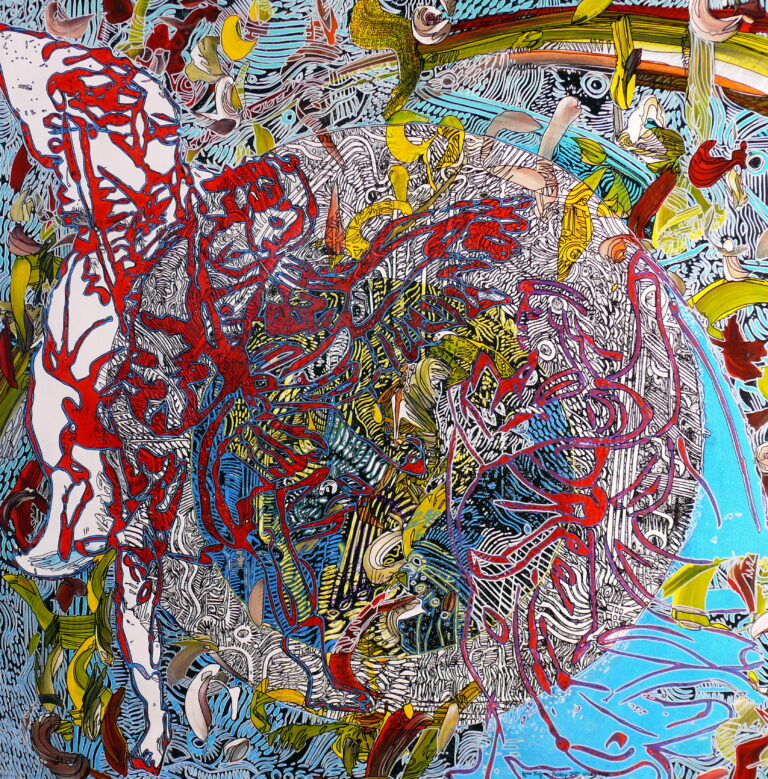
Art—particularly painting—has always responded sensitively to this transformation. The themes of nature and rebirth are not merely visual motifs but inner contents that persist within the deeper layers of artistic expression. The painter does not simply capture a view, but a state, a transition, an almost intangible emotional vibration.
Within this process, the interplay of contrasts gains special significance. Light and shadow, cold and warmth, order and chaos—these are not forces that negate each other, but ones that intensify one another. Baroque art grasped this dynamic with particular sensitivity: its dramatic use of light, structured compositions, and organic ornamentation created a world that is at once sensual and symbolic. Contrasts do not merely shape form; they generate meaning—through them, the tension from which emotion is born becomes visible.
This way of thinking extends beyond art. It is present in all forms of creation and design: the hardness and softness of materials, the smoothness and roughness of surfaces, the meeting of simplicity and complexity—all manifestations of the same principle. The harmony of contrasts is not merely an aesthetic question, but one of the fundamental laws governing existence.
Within this world lives and creates the artist for whom nature is not a subject, but a mode of being. One who has traversed ocean depths, the vastness of deserts, and the dense greens of rainforests—not merely seeing, but experiencing them. The vibrant colors of tropical waters, the swirling motion of barracudas, the almost otherworldly radiance of corals—these are not just memories, but inner images that reappear in the works. Likewise, the timeless silence of deserts and the sharp, pure air of mountain peaks become part of that visual and spiritual universe from which creation emerges.
Yet this experience is inseparable from a realization: all of this is fragile. The Earth—small and blue when seen from above—is not an infinite resource, but a vulnerable system. The destruction of nature is not an abstract idea, but a tangible loss—the disappearance of colors, forms, and living beings. In this sense, art is not only an aesthetic act but also a testimony: an attempt to preserve what is vanishing.
Our present age confronts humanity with a stark choice. Environmental crises, wars, and the ambivalence of technological progress all pose the same question: are we capable of taking responsibility for our future? Nature can survive us—this thought is both frightening and liberating. It reminds us that humanity is not the master, but a part of this system.
In such a context, the role of art becomes ever more significant. Its task is not to beautify reality, but to reveal its layers—even when they are painful. This is especially true in the representation of war. Destruction, disintegration, and the loss of human dignity are not aesthetic experiences, but moral challenges. The responsibility of the artist is not to idealize, but to confront.
And yet, despite the darkness, the possibility of hope remains. Rebirth is not a single event, but an ongoing process—within nature, within humanity, within thought itself. In this process, art functions as a bridge: connecting past and future, humanity and nature, dream and reality.
Perhaps this is the most essential realization: that every creation is an invitation. An invitation to reconnect—with one another, with the world, with ourselves. And if we are capable of this connection, then perhaps it is not too late. Perhaps there is still time not only to survive, but truly to live—in a world that does not merely exist, but is continually reborn within us.